

A Dead Simple Guide To See If You Should Niche Down
When should you niche down and when should you pursue another strategy? Read this to find out.

The beauty of a good category strategy is that it helps you identify the path of least resistance to building a dominant, profitable, and defensible business. For many, that strategy is to niche down. It’s one of the plays I outlined in The 6 Category Strategies.
But “niching down” can get a bad rap sometimes.
The phrase implies that you’re settling for a small corner of the market, while you let the big dogs play for the real money. I think that's too narrow of an interpretation. The purpose of category strategy is to find the right approach to growth at a given stage of your company’s evolution. If you decide to niche down, it’s not the only strategy you will ever pursue. It just means that for this chapter, it’s the path that gives you the best odds of making it to the next one.
If you niche down, it’s not the only strategy you will ever pursue. It just means that for this chapter, it’s the path that gives you the best odds of making it to the next one.
Here are a few examples to back this up:
Amazon started as a mere online bookseller.
Veeva initially sold CRM software to life sciences companies. Now they’re valued at over $30B.
Lamborghini originally built tractors for agricultural use after World War II.
Apple’s first computers were for hobbyists and creative types like graphic designers.
Adobe for years sold specialty graphic design software on CD-ROMs. Today it’s a heavy player in marketing and digital experience.
The question is, though, when should you pursue a niche strategy? Here’s a dead simple way to find out.
Meet These Criteria and Niching Down Could Be the Right Move
Below are five criteria you can use to evaluate whether niching down is the correct play for your business. For niching down to be a good fit, all of these criteria must be true.
A Category That’s Mature (Enough)
For a niche strategy to work, the market must be mature enough so that there’s already awareness and demand for the general category you’re participating in. That’s because niche players don’t try to create demand for the category at large; instead, they demonstrate why their particular solution is the best option for a niche audience or application. Nokian, a tire manufacturer based in Finland, is known for its winter tires. It doesn’t need to create demand for tires in general, nor does it attempt to be “better” than brands like Michelin or Goodyear. It simply focuses on being the dominant player in winter tires. However, you shouldn’t niche down in a category that’s not yet mature. Better to explore another strategy like creating a category or winning an emerging category.

The Category Leader Spot Is No Longer Up For Grabs
Categories tend to evolve to a state where there are a few players that lead the space (and enjoy the majority of profits and market share), and a long tail of smaller players. That’s what the work of Paul Geroski shows. He was a British economist who studied how categories evolve. He published his findings in a book called The Evolution of New Markets, and my friends at Category Design Advisors first connected his work with category design. Here’s what that means for you. If there isn’t a category leader yet, why shouldn’t that be you? If the game is still early and the winners have yet to be decided, you may not want to jump straight into a niche strategy. Instead, ask yourself if there’s an opportunity to grab the lead for yourself. That spot will go to someone! (This is the strategy Stripe pursued in the early innings of web payments. Read their story here).

There Must Be a Segment With Underserved Needs
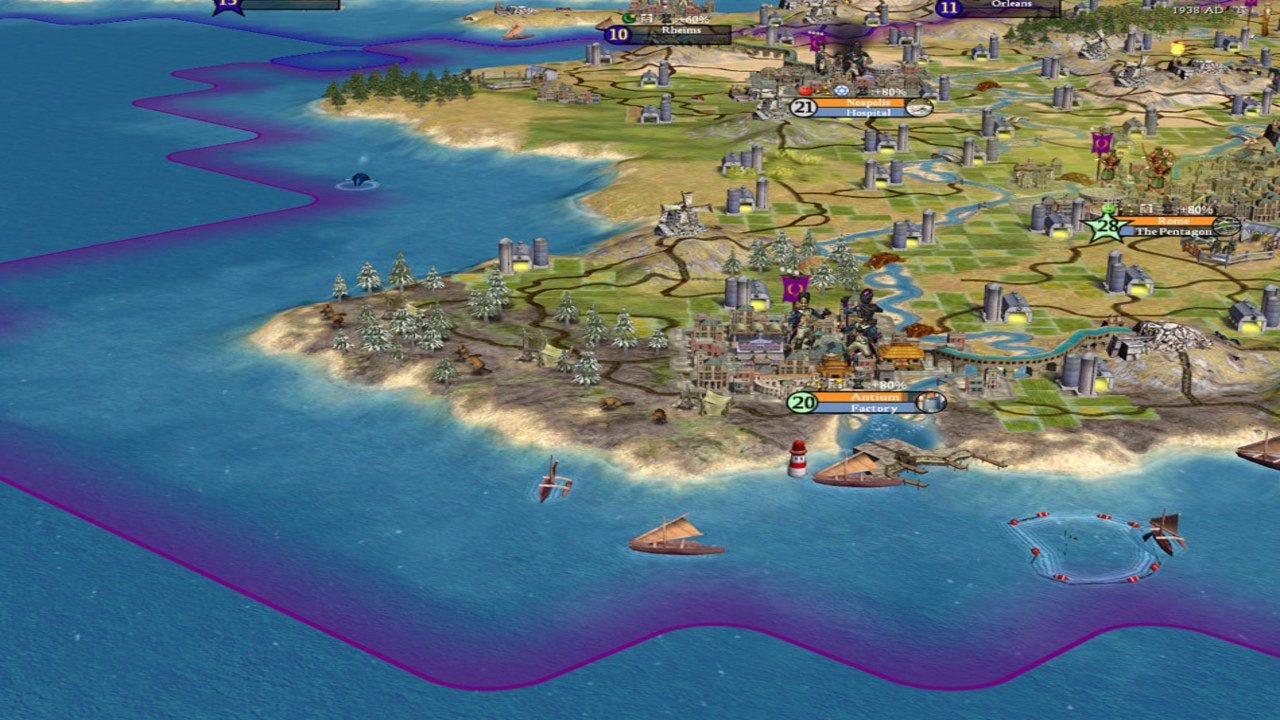
In Sid Meier’s Civilization video game series, you win by developing a civilization that dominates all others. There’s a fixed amount of territory that will eventually be claimed by one civilization or another. At the beginning of the game, the world is entirely unoccupied, but by the end, there isn’t a single tile of available space. Categories are a lot like this. Early on, the category is still taking shape. Eventually, the category will crystalize and there won’t be any free space left. The middle chapter is where the window of opportunity is for a niche play. By finding an audience or an application that other brands have overlooked or underserved, you can claim that territory all to yourself. But wait too long and that space will be grabbed by someone else.
Sufficient Upside
In the real world, you can always find some niche with unique needs that aren’t addressed by the “go-to” offerings in a space. But the question is whether that niche is large enough to satisfy your growth and revenue needs for the next chapter of your business (say, the next three to five years). Not every business has the same goals. Perhaps your goal is to find a niche that can get you to $50M in revenue, and then get acquired. Maybe $50M is just a stepping stone to reaching $1B in revenue. That’s what NVIDIA did by parlaying a graphics card business into the GPU king. Either way, your niche must be large enough to support your near and medium-term ambitions. If such a strategy would be constraining, look at another path.

You Can Build The Solution This Niche Needs
I’ve saved the product criteria for last, but it’s just as important as the others. Suppose you’ve found an underserved market and it’s large enough to meet your growth goals. Can you create a solution that addresses what this market really needs? Something that provides unique and meaningful value over the general-purpose solutions out there? Being a niche player doesn’t mean you don’t invest in research, engineering, or design. (Remember Nokian? They’re the only company in the world with a dedicated winter tire testing facility). Taking a commodity solution and simply marketing it to a narrow audience doesn’t count as a good niche play. A niche strategy isn’t a marketing exercise. Instead, you must create a solution that addresses the unique needs of this space.

Category Strategy Is a Multi-Chapter Game
We only scratched the surface of a niche strategy, but I want to leave you with this: Pursuing a niche strategy doesn’t mean you’re forever constrained to serve a narrow market with a specialty product.
It only means you’ve decided that this approach provides the path of least resistance for this chapter of your business.
A niche strategy might just give you the momentum you need to step up to something bigger as we saw with Amazon. Or it might give you a head start on a new technology that eventually helps you leapfrog bigger players. That’s what Tesla did with its Roadster, a niche car if there ever was one. At the very least, it can help you claim your own territory and avoid commoditization.
My hope is that you find the right category strategy for your current situation and, by doing so, give yourself the best odds of creating a dominant, profitable, and defensible business.
Thanks for reading. I own a consultancy called Flag & Frontier. I help clients define their category strategy, align their executive teams around their strategic narrative, and win their category.
Find out more about working with me by booking an intro call.
You can also say hello on LinkedIn 👋.
Cheers,
John