

How to Think About Differentiation
Most brands use the wrong kind (and wonder why it's so hard to win customers).

No CMO will argue that differentiation isn’t needed. Without differentiation, you’re selling a commodity. But I want to share two ways to think about differentiation with you. First is the way most marketers think about differentiation. It looks something like this:
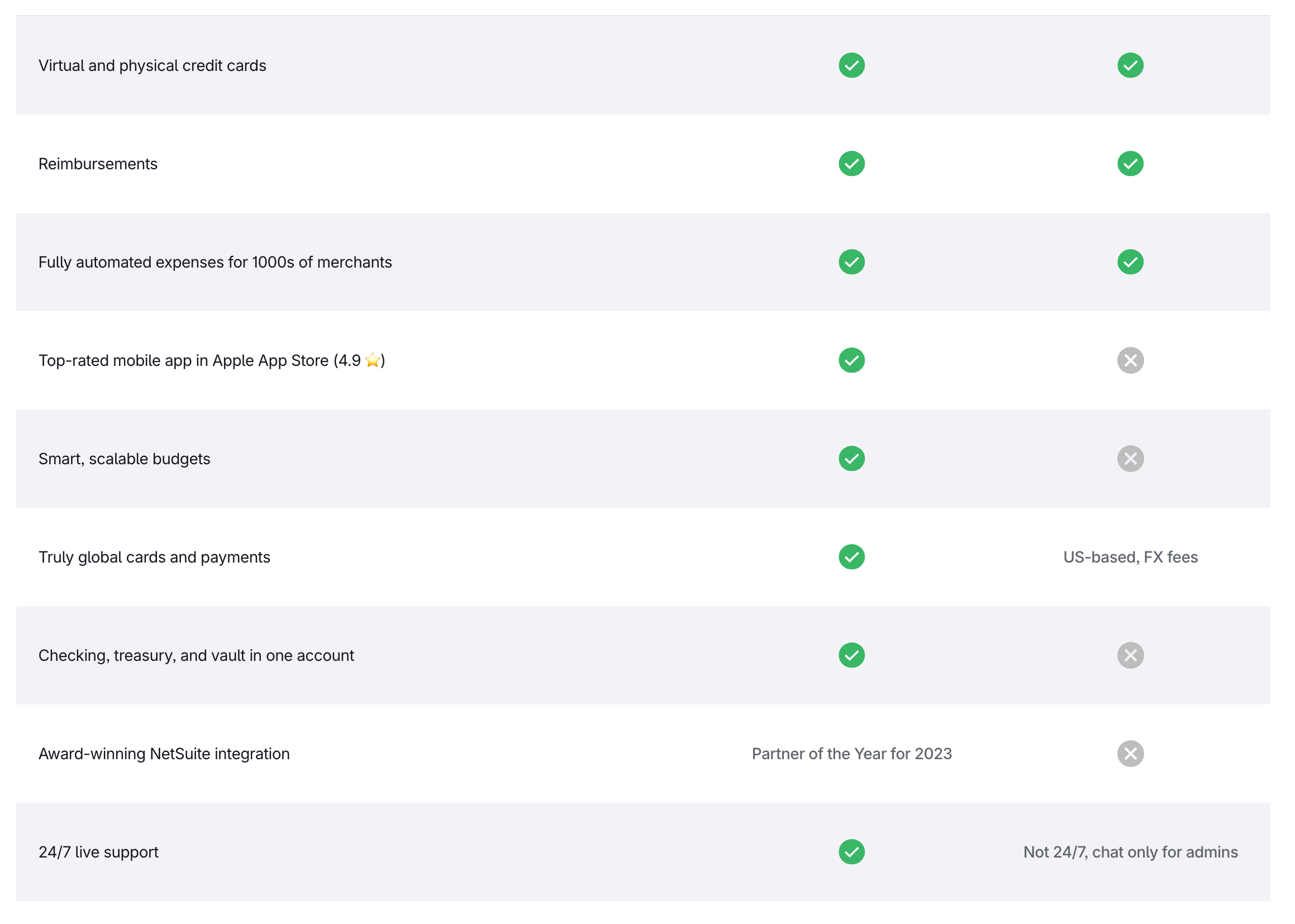
What you’re looking at is an example of attribute differentiation. This is when one product is compared to the other by presenting them under the same structure, or ruleset. Our product has this feature, theirs doesn’t. Ours is this fast, theirs is a bit slower. Our service costs this much; theirs is more.
Are the products different? Yes. Do these points of differentiation matter, though? Well, that depends on who’s doing the comparison. If you’re already leading a category, then you probably won’t go out of your way to show buyers the surface-level differences between you and the upstarts. Usually, it’s the “challenger” brands that attempt this kind of comparison.
Often, the underlying message with attribute differentiation is something like: “Hey, why go with the big guy? They’re expensive and don’t do everything we do.”
But there’s a problem with this type of approach: it’s incredibly difficult to unseat the category leader. Sure, they may cost more, but buyers don’t buy solely on cost. And yes, they may lack some features or fall behind in performance, but who’s to say that’s not already on their roadmap?
And let’s not forget about the things that fall outside the bounds of such a comparison, like security, reliability, and trust. No one gets fired for buying the category leader, so unless you’ve built something that outperforms so dramatically that you can override those concerns, then winning becomes very difficult. It’s not that products with a 10x step change in performance don’t exist; they’re just extremely rare.
If you’re already leading a category, then you probably won’t go out of your way to show buyers the surface-level differences between you and the upstarts.
All of this aside, buyers are smart.
They know that any brand that offers a side-by-side comparison will stack the list in their favor. If buyers see through your differentiation tactic, then it’s not really effective differentiation, is it?
The other approach to differentiation is to make a categorical comparison. You could use the terms fundamental or architectural if you prefer. Instead of making a comparison within the same ruleset, categorical differentiation presents a different set of criteria entirely. Instead of comparing apples to apples, you offer an orange.
Here’s an example you already know.
If Delta and United compare themselves on criteria like price, routes, fees, and amenities, they are using attribute differentiation. But a fractional private jet company, like NetJets, wouldn’t compare itself to either airline using that approach. Instead, it would make a categorical level comparison to contrast the differences between commercial air travel and fractional private jets. It might make a similar comparison to private jet ownership.
Instead of making a comparison within the same ruleset, categorical differentiation presents a different set of criteria entirely.
Categorical comparisons are powerful because instead of trying to answer the same question with a better answer, they answer a different question altogether. However, most brands fall into the confines of attribute differentiation and then wonder why winning customers is so difficult.
That’s why your challenge isn’t to develop a more impressive feature list; it’s to find a more fundamental difference that presents your solution as the only obvious choice. For more on this, see The 6 Category Strategies.
Thanks for reading.
If we haven’t met, I own a consultancy called Flag & Frontier, where I help my clients define their category strategy, align their executive teams around their strategic narrative, and win their category.
Find out more about working with me by scheduling a 30-minute intro call.
You can also say hello on LinkedIn 👋.
Cheers,
John
P.S. I have some changes coming soon to The Narrative Field Guide. You can read about them here. Can’t wait to share what’s next with you.